Burst pipe repair Kokomo winter: costs, steps & pipe types
Burst pipe repair Kokomo winter: costs, steps and which pipes fail first
⏱️ 14 min read · Last updated: 2026
- Indiana frost line near Kokomo (Howard County): approximately 36 inches — any supply pipe buried shallower than this is at freeze risk during a hard winter
- Pipe freeze threshold: outdoor temperatures of 20°F (−7°C) or below commonly cause uninsulated pipes to begin freezing, per American Red Cross winter preparedness guidance
- Burst pipe repair cost in Kokomo: $200–$1,500 for accessible sections; after-hours emergency service commonly adds $100–$250 to the base rate in Indiana
- PEX pipe can expand approximately 8% before rupturing — copper pipe has zero flex and splits at the point of freeze
- Three locations account for most Kokomo burst pipes: exterior walls with inadequate insulation, unheated garages with supply lines, and crawl spaces open to outside air
The pipe that burst in your basement probably wasn’t the one you thought to insulate. Burst pipe repair Kokomo winter calls almost always trace back to one overlooked stretch — not the main line, not the water heater feed, but an 18-inch copper run where an elbow meets an exterior wall with bare fiberglass behind it. The pipe freezes at the elbow, expands lengthwise, and cracks. By the time you hear water, it has been running for 20 minutes.
Most guides on this topic give you the same five steps: keep your thermostat above 55°F, open cabinet doors, let the faucet drip. That advice isn’t wrong. It just misses the two variables that actually determine whether your Kokomo home bursts a pipe or doesn’t: what your pipes are made of, and whether they sit above or below Indiana’s frost line. A copper pipe behind an uninsulated exterior wall will fail at 20°F regardless of how high you set your thermostat.
What follows is the specific stuff — the frost depth figure for Howard County, which Kokomo home eras are highest-risk, what PEX pipe actually does during a freeze, and the exact step-by-step for shutting off water and limiting damage. The cost table is built from Indiana rates, not a national average.
What do I do if a pipe bursts during a Kokomo cold snap?
Shut off the water main immediately — that single action determines how much of your home is damaged. Every other step (calling a plumber, mopping up, filing an insurance claim) happens after that valve is closed. Every minute water runs unchecked, it adds square footage to the cleanup, risk to your subfloor, and dollars to the remediation bill.
Your water main shutoff valve is almost always in one of three places: near the front wall of your basement on the pipe entering from the street, inside a utility closet next to the water meter, or inside a curb box buried near your property line at the street. In most Kokomo homes built before 1985, the interior shutoff is a gate valve — a round handle you turn clockwise multiple times until it stops. Newer homes typically have a ball valve with a lever handle that rotates 90 degrees to close.
Once the water is off, open the lowest faucet in the house — a basement utility sink or an outdoor spigot — to bleed residual pressure from the lines. Water can continue to seep from a crack even after main shutoff if pressure remains in the system. Opening that low faucet stops it. Then cut power to any circuits serving the wet area at the breaker panel before you step into standing water.
For a burst pipe — not just a freeze — the pipe section is compromised and needs replacement, not just thawing. Calling an emergency plumber Kokomo IN while you manage the water shutoff is the right call. Give the dispatcher the pipe material if you know it, and let them know whether there is active flooding — it changes how fast they route the call.
Why certain Kokomo homes burst pipes before others do
Home age and pipe material are the two biggest factors — and in Kokomo, they overlap in predictable ways. Homes built between 1950 and 1985 are most likely to have copper pipe routed through exterior walls with minimal insulation behind the pipe and no heat tape. These are the homes that generate the most burst pipe repair calls every January and February in Howard County.
Galvanized steel pipe, found in some pre-1960s Kokomo homes, fails differently. It corrodes from the inside over decades, and a hard freeze cracks sections that are already weakened by rust. If you have galvanized pipe and you are dealing with your second or third winter burst, the pipe is not just vulnerable to cold — it is at the end of its service life. Targeted repair is a temporary fix; full repiping is the correct long-term answer.
Three locations account for the majority of residential burst pipe calls in Kokomo:
- Exterior walls — particularly north- and west-facing walls, where wind chill accelerates pipe temperature drop through even modest insulation gaps
- Unheated garages — especially when a bathroom, utility sink, or laundry was added to the garage space and the supply line runs through or along an uninsulated garage wall
- Crawl spaces with open vents — when vents are left open in winter, outside air flows directly over pipes along the floor joists; at 25°F with any wind, a pipe can freeze within hours even if the outside air temperature is technically above the typical freeze threshold
Kokomo homes built before 1985 are disproportionately represented in winter burst pipe calls because copper pipe routed through exterior walls was standard practice — and those walls were insulated for energy efficiency, not for pipe protection.
The crawl space scenario is underrepresented in most burst pipe guides. If your home has a vented crawl space and your supply pipes sit within six inches of the vent openings, wind chill alone can freeze them at 25°F — even if the air temperature inside the crawl reads above 32°F on a thermometer. Closing crawl space vents in late October costs nothing and is one of the most effective preventive measures a Kokomo homeowner can take before December arrives.
How Indiana’s frost line determines where your pipes are most at risk
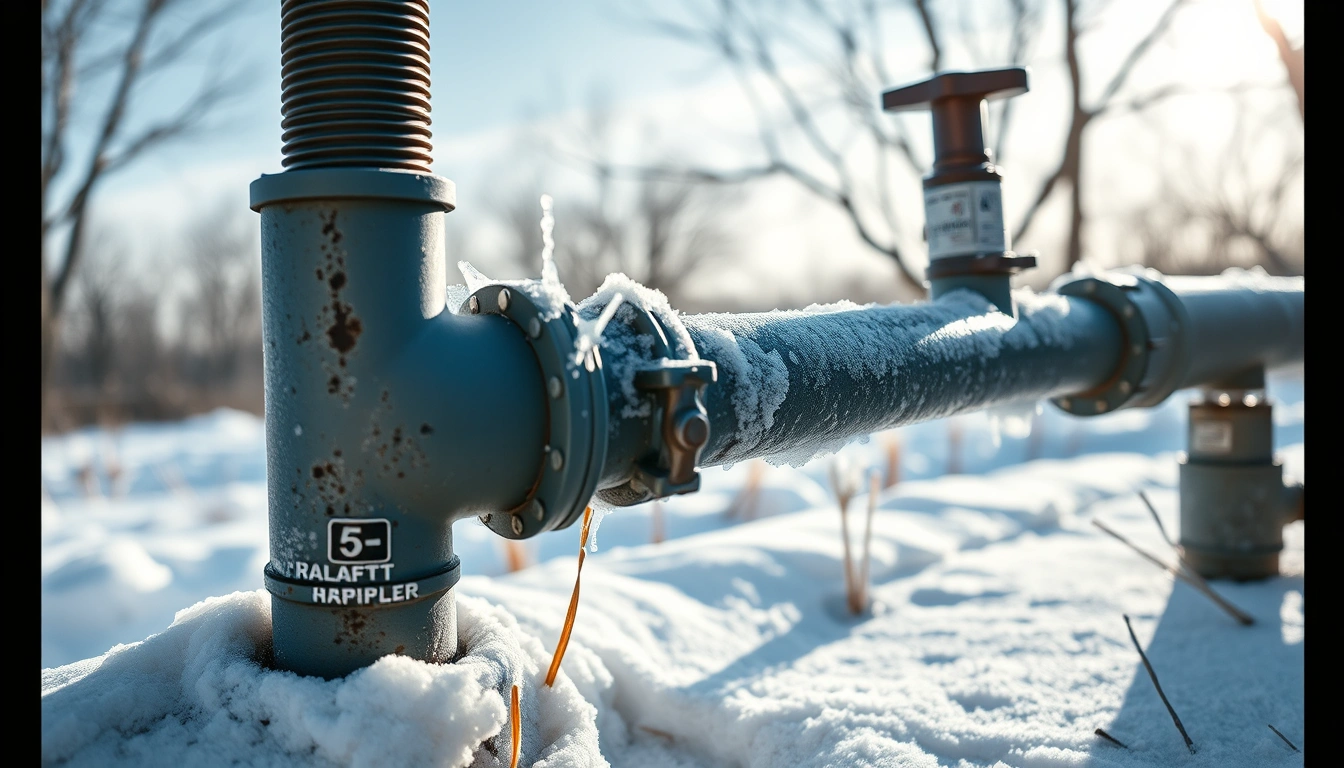
The Indiana frost line — the depth to which the ground freezes during a typical winter — sits at approximately 36 inches for the Howard County area where Kokomo is located, based on ASCE 7 frost depth tables referenced in the International Residential Code. Water supply lines must be buried below this depth to stay above 32°F during a normal winter. Soil below the frost line acts as natural insulation; soil above it does not.
The problem is that many Kokomo homes built before 1960 were plumbed with supply lines at 24–30 inches — technically compliant under older standards, but exposed when frost penetrates deeper during a sustained cold event. When outdoor air stays below 20°F for 48 hours or more, frost can push past the 30-inch mark in unsheltered soil. That is when shallow-buried lines begin to freeze.
How to tell if your buried supply line might be shallow: note where the main water line enters your basement. If it comes in very close to the foundation wall — within 12 inches of the interior face — and you have had outdoor supply lines freeze before, there is a reasonable chance the line was installed shallower than 36 inches. A camera inspection or a review of original permit records at the Howard County Building Department can confirm it.
Interior pipes are less exposed than buried ones, but the Indiana freeze line still affects them indirectly. Once a pipe runs through a cavity that contacts outside air — a rim joist, an uninsulated exterior wall cavity, a crawl space open to winter wind — it loses the temperature buffer of the interior and behaves like a lightly buried exterior line. That is why the Indiana frost line matters even for above-grade plumbing: the principle is the same.
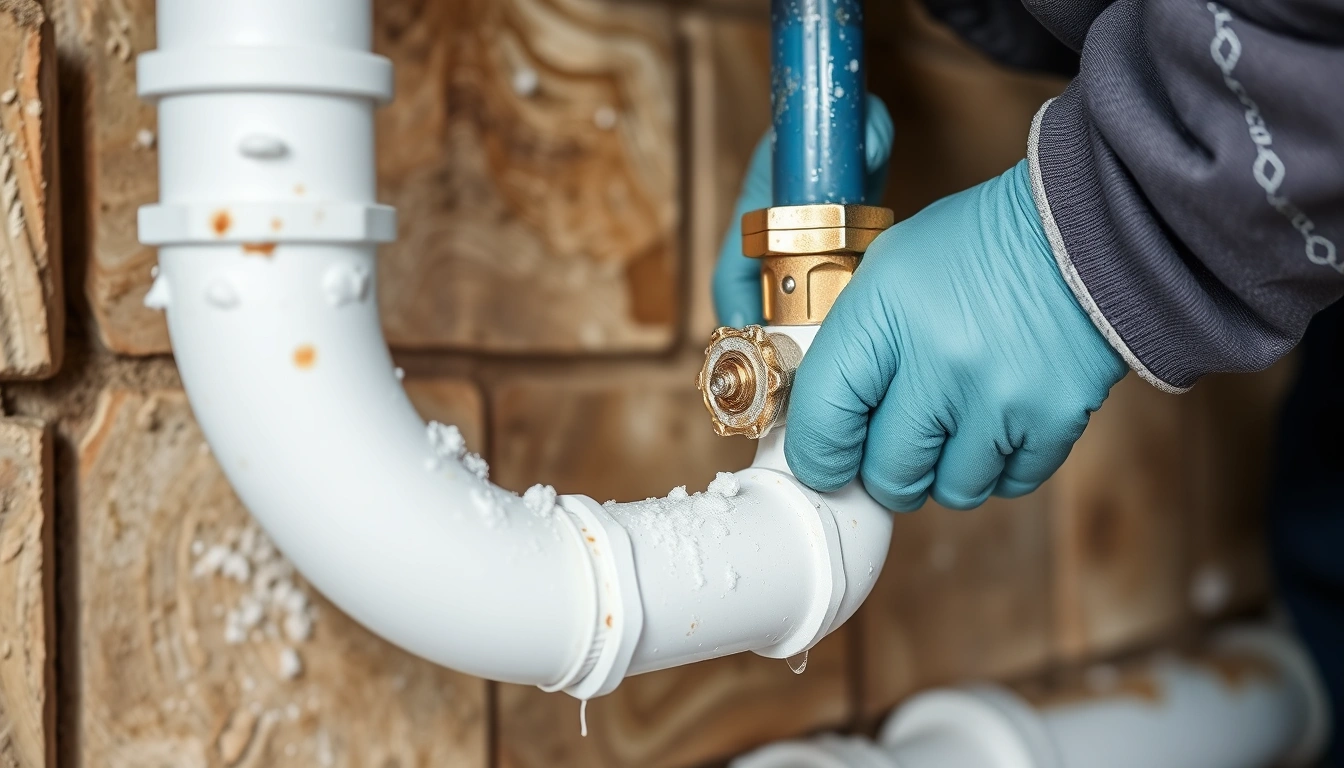
The correct way to shut off your water and limit damage — step by step
Shutting off the water in the right sequence — and doing it fast — is the difference between a $400 plumbing repair and a $6,000 water damage remediation job. Here is the exact sequence that licensed Kokomo plumbers recommend when a pipe bursts in a residential home.
- Locate your water main shutoff valve before you need it. It is typically on the same interior wall where the water line enters the house, within five feet of the front foundation wall. Mark it with a tag or paint chip now — not during the emergency. Tell every adult in your household where it is.
- Close the valve. Gate valves (round handwheel) require multiple clockwise turns until resistance stops. Ball valves (lever handle) rotate 90 degrees — the lever perpendicular to the pipe means closed. Do not force a stiff gate valve; use a pipe wrench on the stem if needed, but stop before it strips.
- If the interior valve fails, use the street curb box. The curb box is a small covered pit near your property line. A T-bar shutoff key (available at any hardware store) operates most Indiana curb boxes; some older boxes accept a large flathead screwdriver. Turn counterclockwise to close.
- Open the lowest faucet in the house. A basement utility sink or first-floor faucet will do. Leave it open until water flow stops completely — this releases trapped pressure from the lines and prevents continued seepage at the burst point.
- Cut power to the affected area at the breaker panel. Do this before entering standing water. Identify the circuits for the affected rooms and switch them off. If you are unsure which breaker, shut off the main breaker. Electrocution from live outlets in standing water is a real hazard.
- Move belongings off the wet floor immediately. Saturated cardboard, wooden furniture, and area rugs absorb water within minutes and become vectors for mold within 24–48 hours. Move everything reachable to dry ground before it is soaked.
- Photograph and video the damage before touching anything else. Walk through the affected area and document: the burst pipe location, the extent of standing water, everything visibly damaged. Your homeowner’s insurance adjuster will request this documentation before approving the claim.
- Call your insurance company and a licensed plumber — in that order. Opening the claim early preserves your timeline. When you call the plumber, tell them the pipe material (copper, PEX, galvanized), the location in the house, and whether there is active flooding — it lets them arrive with the right fittings.
What not to do during this sequence: do not run the dishwasher or washing machine trying to drain the lines faster — it does not help and may introduce air into pump seals. Do not patch the burst with epoxy putty or pipe repair tape as a permanent fix — these are emergency measures for pinhole leaks in dry conditions, not for a freeze burst under pressure. And do not assume the visible burst is the only one. Have the plumber inspect the full line segment on the repair visit.
How much does burst pipe repair Kokomo winter cost in 2026?
Burst pipe repair in Indiana typically runs $200–$1,500 for an accessible section — the range is wide because pipe location matters far more than the pipe itself. A burst copper elbow in an open basement ceiling costs a fraction of the same repair inside a finished wall where the plumber needs to open drywall, cut the pipe, replace the section, and close the wall back up.
| Repair scenario | Typical cost range (Indiana, 2026) | Primary cost driver |
|---|---|---|
| Accessible pipe in open basement ceiling | $200–$400 | Labor plus fittings; quick job with clear access |
| Pipe inside a finished wall or ceiling | $500–$1,000+ | Drywall opening and closure; patch and repaint often quoted separately |
| Crawl space or confined-access repair | $400–$900 | Access difficulty adds labor time; often requires two-person crew |
| Multiple burst sections from severe freeze | $1,200–$3,000+ | Full segment replacement; possible upgrade from copper to PEX pipe |
| After-hours emergency premium (Indiana) | +$100–$250 above base rate | Evenings, weekends, and holidays; Kokomo area rates vary by company |
These figures cover the plumbing repair only. If the burst caused water to run unchecked for more than 30 minutes — common when a pipe bursts overnight — water damage remediation is a separate cost that commonly exceeds the plumbing repair. A finished basement flooded by a burst copper line that ran for two hours can generate $5,000–$15,000 in remediation costs for drying, drywall replacement, and flooring, separate from the plumbing invoice.
In most Indiana burst pipe claims, the plumbing repair is the smallest line item — water damage remediation is what drives the total claim cost into the thousands.
One 2026-specific note: copper fitting prices in Indiana have remained elevated compared to pre-2022 levels. If a plumber quotes you a copper repair and the pipe is in an accessible location, ask whether running PEX pipe for that section costs less. It typically does, and you gain freeze resistance going forward. Most Kokomo plumbers who work in residential repair are comfortable with both materials.
On insurance: most standard homeowner’s policies in Indiana cover sudden, accidental burst pipe damage to the structure and personal property. Slow leaks and gradual pipe deterioration are typically excluded. A pipe that burst because it froze during a cold snap is generally covered — but open the claim promptly and document before cleanup, not after.
PEX vs copper: which pipe actually survives a Kokomo freeze
PEX pipe handles freezing significantly better than copper — not because it is impervious to ice, but because it can expand before it ruptures. PEX (cross-linked polyethylene) can stretch approximately 8% volumetrically when ice forms inside it, which is often enough to absorb a mild freeze without cracking. Copper has zero give. When ice expands inside copper, the pipe splits — usually at the elbow or at a soldered joint, which is the weakest point in the line.
| Pipe type | Freeze resistance | Failure mode | Relative material cost | Common in Kokomo homes built |
|---|---|---|---|---|
| PEX pipe | High — expands ~8% before rupture | Often survives single mild freeze; cracks on repeated severe events | Lower | 2000s–present |
| Copper pipe | Low — zero flex | Splits at freeze point; typically at elbows or soldered joints | Higher (elevated since 2022) | 1960s–2000s |
| Galvanized steel | Low — rigid; corrodes internally | Splits at corrosion weak points; freeze accelerates existing failure | Moderate (largely discontinued) | Pre-1960s |
| CPVC | Moderate — slightly more flexible than copper | Cracks under hard freeze; becomes brittle in extreme cold | Lower | 1970s–2000s |
The practical implication for Kokomo homeowners: if you are replacing a burst copper section, ask the plumber about running PEX pipe instead. PEX is easier to route through tight spaces because it bends without fittings, costs less per linear foot than copper, and is fully accepted under Indiana Residential Code for water supply. The tradeoff is that copper has a longer rated service life — 50+ years versus PEX’s 25–50 years — but that rarely matters in a repair context where you are replacing one section, not the full system.
One nuance most articles skip: PEX pipe is not infinitely freeze-resistant. In a sustained polar vortex event where the pipe is exposed to well-below-zero temperatures for 12 or more hours, PEX can still crack — particularly at crimp fittings where the material is compressed. The advantage PEX offers is resilience during the brief 20–30-degree overnight drops that are the most common freeze scenario in Kokomo’s Howard County winters. It survives those. Copper does not.
The spot that keeps freezing every year — and how to finally fix it
A pipe that freezes in the same location every winter has a root cause that thawing it does not fix. The pipe is cold there because something creates a cold pathway to it — and until that pathway is broken, the pipe will freeze again regardless of how many times you run a hair dryer across it. Identifying and interrupting that pathway is what burst pipe repair Kokomo winter prevention actually looks like beyond the repair itself.
The most common root causes of recurring freeze locations in Kokomo homes:
- A gap in exterior sheathing or insulation — often from a cable or wire penetration, a dryer or bathroom vent, or batt insulation that has sagged away from the wall cavity, creating an air channel directly to the pipe
- An uninsulated rim joist section — the rim joist is the band of framing at the top of the foundation wall where floor joists meet the exterior; it is notoriously underinsulated in pre-1990 Kokomo homes and sits right next to where pipes often run
- A plumbing addition routed through an exterior wall without insulation sleeves or foam seal around the pipe penetration
- Crawl space vents left open in winter, allowing outside air to flow directly over pipes along the floor joists
Diagnosing your recurring freeze point
A thermal imaging camera reveals cold spots in walls without opening any drywall. Phone-attached thermal cameras are available for under $300 and rentable from tool rental companies in the Kokomo area. Run one along the exterior wall where the pipe freezes after a cold night — the cold pathway shows up as a blue or purple streak on the display. That streak tells you exactly where the insulation is failing and where to focus the fix.
The key visual marker here is a streak that connects the exterior wall to the pipe location. A diffuse cold area covering the whole wall usually means inadequate insulation overall. A narrow streak running from a specific point — a wire penetration, a window corner, a rim joist line — points to a gap. Rim joist gaps are the most common find in Kokomo basements, and they are visible without thermal equipment once you know to look: the rim joist will feel noticeably cold to the touch even at moderate outdoor temperatures.
Permanent solutions by root cause
- Rim joist exposure: two-part spray foam applied directly to the rim joist between floor joists — a genuine DIY repair. Target R-13 or higher at the rim joist; in most uninsulated Kokomo basements, the existing value is close to zero. A typical basement rim joist section costs under $100 in materials.
- Insulation gap in exterior wall cavity: dense-pack cellulose or spray foam blown into the cavity from the exterior. This is a job for an insulation contractor — typically $300–$800 depending on wall area — but it permanently eliminates the cold pathway rather than working around it.
- Pipe routed through exterior wall without insulation: electrical heat tape (pipe freeze protection cable), wrapped around the vulnerable section and plugged in when temperatures approach 20°F. Available in pipe-rated versions at hardware stores for $30–$80 depending on length, and approved for use on both copper and PEX pipe.
- Crawl space with open vents: close the vents in October, reopen in April. If the crawl has no insulation on its perimeter walls, adding faced batt insulation to the interior foundation walls is the Indiana-accepted approach for conditioned crawl spaces and adds meaningful pipe protection.
The honest answer on DIY versus professional: locating the cold pathway and fixing insulation gaps is accessible to most homeowners with a weekend afternoon. The actual pipe repair — cutting, fitting, and soldering copper, or running new PEX with proper crimp or expansion connections — is best handled by a licensed plumber unless you have specific experience. A pipe repair that looks correct but is slightly misaligned at a joint can fail again under pressure, and this time it may fail while you are out of town.
- Shut off the water main shutoff valve first — every other response step depends on that water being off
- Indiana’s frost line near Kokomo is approximately 36 inches; supply pipes buried shallower than that are at freeze risk every hard winter in Howard County
- PEX pipe expands ~8% before rupturing; copper has zero flex and splits at the freeze point — ask about PEX when getting a repair quote for a copper section
- A pipe that keeps freezing in the same spot needs insulation work, not just a repair — use a thermal camera to find the cold pathway and break it permanently
Common questions about burst pipe repair Kokomo winter
What causes pipes to burst in Kokomo winters specifically?
In Kokomo, burst pipes are most often caused by copper pipe in exterior walls with inadequate insulation, or shallow-buried supply lines exposed when frost penetrates past 30 inches. Howard County’s frost line sits at approximately 36 inches, meaning pre-1960s homes with supply lines at 24–30 inches are at recurring risk during any sustained cold snap below 20°F.
How do I shut off water after a burst pipe, step by step?
Find the water main shutoff valve near the front wall of your basement. Gate valves turn clockwise until fully closed; ball valves rotate 90 degrees. If the interior valve fails, use the street curb box with a T-bar key. Once closed, open the lowest faucet in the house to release trapped pressure, then cut power to any circuits near the wet area at your breaker panel before stepping into standing water.
PEX vs copper — which resists freezing better in Indiana winters?
PEX pipe resists freezing significantly better than copper because it can expand approximately 8% before rupturing, while copper has zero flex and splits at the freeze point. For Indiana’s typical brief cold snaps below 20°F, PEX often survives intact. It is also less expensive per linear foot than copper in 2026, making it a sensible upgrade to consider when repairing a burst copper section.
Why does my pipe keep freezing in the same spot every winter, and how do I fix it?
A recurring freeze spot means there is a cold air pathway reaching that pipe — usually an insulation gap, an uninsulated rim joist section, or a pipe penetration through an exterior wall that was never sealed. Thawing the pipe does not fix it. A thermal imaging camera scan after a cold night shows the pathway as a visible streak. Seal the gap with spray foam or add pipe heat tape rated for freeze protection; the pipe will stop recurring.
How much does emergency burst pipe repair cost in Kokomo, Indiana in 2026?
Burst pipe repair in Kokomo commonly runs $200–$1,500 for accessible pipe sections in 2026. Pipes inside finished walls add $300–$600 for drywall access. After-hours emergency calls typically add $100–$250 to the base rate. Water damage remediation — separate from plumbing — can reach $5,000–$15,000 if the pipe ran unchecked for an hour or more before shutoff.
At what outdoor temperature should Kokomo homeowners worry about pipes freezing?
Uninsulated pipes commonly begin to freeze when outdoor temperatures reach 20°F (−7°C) or below, according to American Red Cross winter preparedness guidelines. Risk increases when temperatures stay below 20°F for six or more consecutive hours — especially overnight, when heating cycles slow and interior pipe temperatures drop. For frozen pipe repair in Kokomo, call a plumber once the water main is shut off and the immediate flooding is controlled.
Does homeowner’s insurance cover burst pipe damage in Indiana winters?
Most standard Indiana homeowner’s policies cover sudden, accidental burst pipe damage — including water damage to floors, walls, and personal property. Slow leaks and gradual pipe deterioration are typically excluded. A pipe that froze and burst during a cold snap is generally a covered event. Photograph everything before cleanup, open your claim promptly, and ask whether the plumbing repair itself or only the resulting water damage is covered — policies vary on that specific point.
The bottom line
Burst pipe repair in Kokomo in winter comes down to two things most guides skip: your pipe material and the Indiana frost line. Copper in an exterior wall will split at 20°F because it has nowhere to flex. A supply line buried at 24 inches will freeze during any sustained cold snap because Howard County’s frost penetrates to 36 inches. These are the mechanics behind most January plumbing calls — not unusual bad luck, but predictable physics.
If you are reading this after a burst, fix the pipe and then spend one afternoon finding the cold pathway that caused it. Rim joist foam is a Saturday project. Heat tape on a vulnerable section is a 30-minute install. Neither costs more than $100. For everything else — diagnosis, active flooding, or if you want to know what to expect and what a fair price looks like before anyone shows up — the full guide to Emergency Plumber in Kokomo, IN: 24/7 Response, Costs & What to Do First covers the rest. Start with the shutoff valve location this week. Everything else follows from there.
See also: emergency plumber Kokomo IN
Related: sump pump failure Kokomo basement
Related: after hours plumber Kokomo cost
Related: hydro jetting Kokomo
Related: hydro jetting cost
Related: main line clog repair